Description
We would be happy to advise you on individual projects and specific research questions.
Which questions is DNA barcoding suitable for?
DNA barcoding is a suitable method for identifying fungal species based on established marker regions. This method is particularly useful for distinguishing morphologically similar species, verifying species identity and identifying samples with incomplete or missing morphological characteristics.
DNA barcoding is not suitable for determining the edibility, toxicity, medical effects or legal classification of fungi. Even when sequencing is successful, unambiguous species identification may not be possible in certain species groups or where reference databases are insufficient.
We recommend prior professional consulting for complex research questions or taxonomically challenging groups. Book consulting now.
Which sample material can be used?
Successful DNA extraction depends on the quality and condition of the sample material. Based on our experience, we are particularly well equipped to process certain types of samples. Please observe the following guidelines.
The following samples are suitable:
- Dried fungal fruiting bodies, ideally including parts of the hymenophore
- Dried rhizomorphs
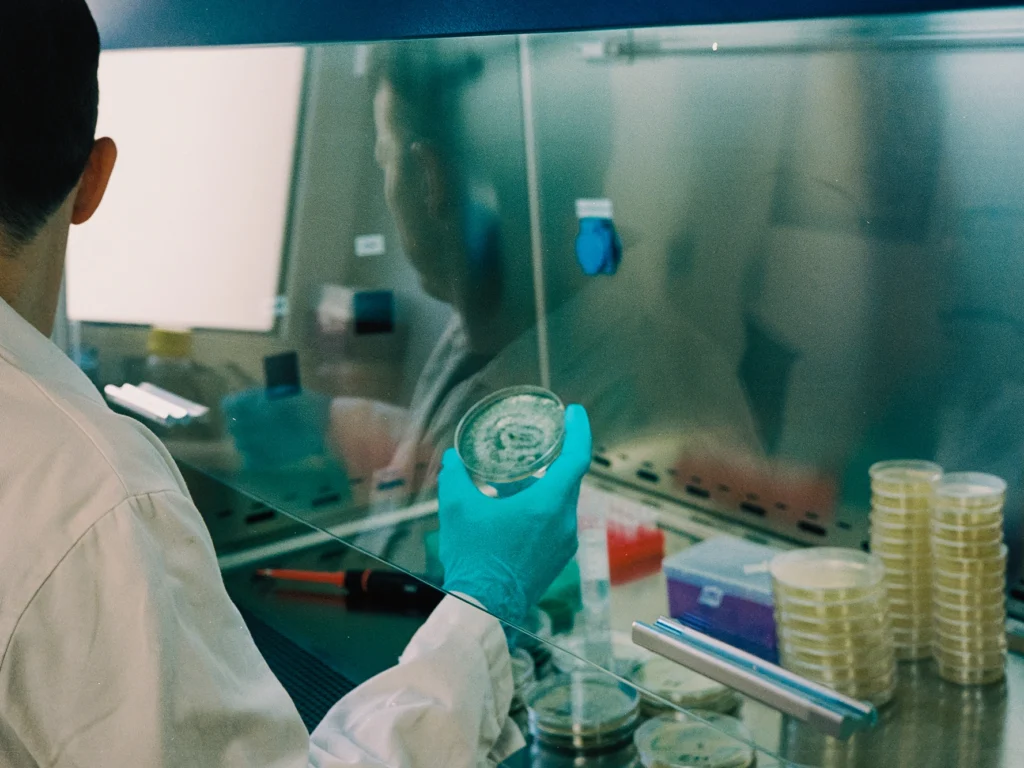
- Pure cultures on Petri dishes, securely sealed with tape
If you have any questions about the suitability or preparation of your samples, we will be happy to advise you in advance.
How should the samples be prepared and packaged?
The quality and significance of the analysis depend largely on the condition of the sample material provided. Incomplete drying, exposure to high temperatures, or contamination can all impair the quality of the sample. In such cases, DNA extraction or sequencing may be unsuccessful or limited. Therefore, successful sequencing or clear species identification cannot be guaranteed in all cases. The risk associated with insufficient sample quality lies with the client.
Please package samples individually in plastic tubes or comparable sturdy containers to ensure the material is protected during transport.
Fruiting bodies should be dried gently as soon as possible after collection. It is recommended that they are dried uniformly at low temperatures (below 40 °C) with adequate air circulation or using silica gel. Drying at excessively high temperatures or incomplete drying can lead to DNA degradation.
Sample quantity: At least 0.5 g of dried sample material per sample is required.
How should samples be shipped?
Please send your samples only after you have placed your order, as they will only be processed once payment has been received. Each sample must be clearly and legibly labelled with a number (1, 2, 3, etc.). Individual sample names cannot be taken into account. If you have any information about the species you are sending, please include it with the shipment. For larger sample numbers, please submit it by email.
Send samples to:
MyPilz GmbH
Wienerbergstraße 55/13-15
1120 Vienna, Austria
Which barcodes/markers are sequenced?
For fungi, the ITS region is standardly sequenced as the primary barcode. For taxonomically complex groups, additional established markers such as TEF, RPB2, BenA and CaM can be used to increase resolution. This is useful in species-rich genera or species complexes, for example, where the ITS region does not allow clear differentiation.
An additional marker can either be selected at the time of ordering, or may prove necessary after evaluation of the ITS sequence. In this case, the analysis can be performed subsequently using the same sample material, and will be charged separately.
| Region | Abbreviation | Primer | Primer F | Primer R | Reference |
| Internal Transcribed Spacer | ITS | ITS5 & ITS4 | GGAAGTAAAAGTCGTAACAAGG | TCCTCCGCTTATTGATATGC | White et al. 1990 |
| Translation elongation factor 1-alpha | TEF1a | EF1-1018F & EF1-1620R | GAYTTCATCAAGAACATGAT | GACGTTGAADCCRACRTTGTC | Stielow et al. 2015 |
| RNA Polymerase 2 | RPB2 | fRPB2_5f & fRPB2_7cr | GAYGAYMGWGATCAYTTYGG | CCCATRGCTTGYTTRCCCAT | Liu et al. 1999 |
| ß-tubulin | BenA | Bt2a & Bt2b | GGTAACCAAATCGGTGCTGCTTTC | ACCCTCAGTGTAGTGACCCTTGGC | Glass und Donaldson 1995 |
| Calmodulin | CamA | CMD5 & CMD6 | CCGAGTACAAGGARGCCTTC | CCGATRGAGGTCATRACGTGG | Hong et al. 2006 |
How long does the analysis take?
Once we have received the sample, it usually takes 2–3 weeks to process them. The results will be sent to you by email.
What do the results look like?
Two result formats are available.
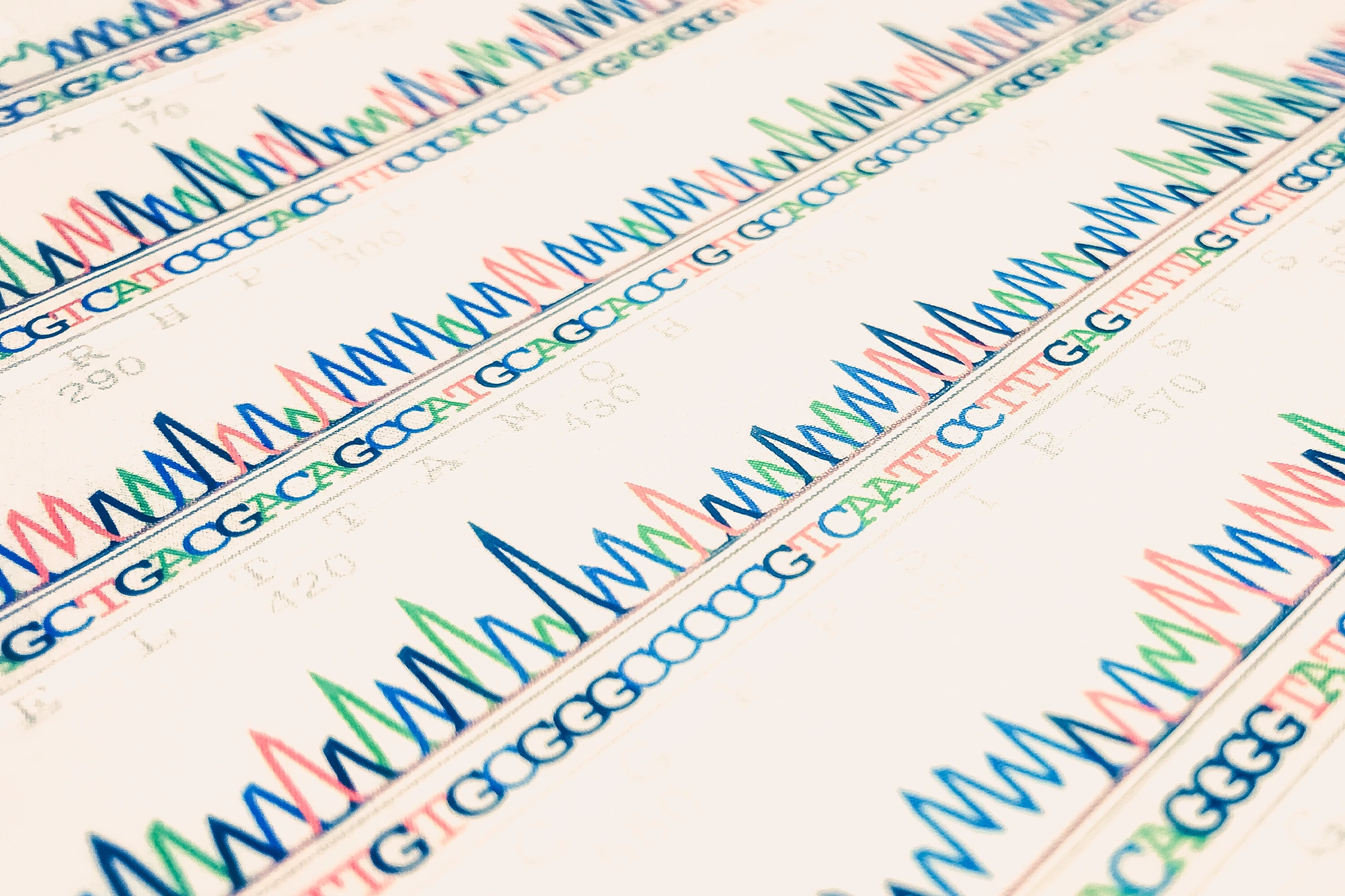
Sequencing without identification: This option includes the raw sequencing data, including FASTA files and the associated raw sequence reads, without interpretation or species assignment.
Identification by database comparison: This option includes a processed consensus sequence and species assignment based on comparison with reference databases using BLAST.
In addition, phylogenetic analyses using tree reconstruction can be performed if required.
Even when sequencing is successful, unambiguous species identification may not be possible in certain species groups or where reference databases are insufficient.